

A small dent or scuffed bumper can seem like a cosmetic issue you can deal with later, but that decision often costs far more than the repair itself would have. Minor collision damage tends to worsen quietly, spreading rust, weakening structural components, and lowering your vehicle’s resale value while you put off the fix. Understanding exactly what happens beneath the surface of that “harmless” ding can help you make a smarter, faster decision.
Here is what really happens when small damage sits untreated, and why acting early almost always saves money.
Rust Formation Beneath Chipped Paint
When a collision chips or cracks your vehicle’s paint, it exposes bare metal to moisture, road salt, and oxygen almost immediately. This combination triggers corrosion that spreads underneath the surrounding paint layer, often invisibly, until the damage becomes far larger than the original chip. By the time bubbling or flaking paint appears, the rust has usually been working its way through the metal for months.
Once rust sets into a panel, a simple auto repair job turns into a much larger project involving panel replacement or extensive metal treatment. Catching the damage early, before corrosion starts, keeps the fix limited to the surface rather than the structure underneath.
- Coastal and cold-climate drivers face faster rust spread due to salt exposure
- Even small chips near wheel wells or door edges are high-risk spots
- Clear coat damage alone can accelerate oxidation within weeks
Structural Misalignment From Unaddressed Frame Impacts
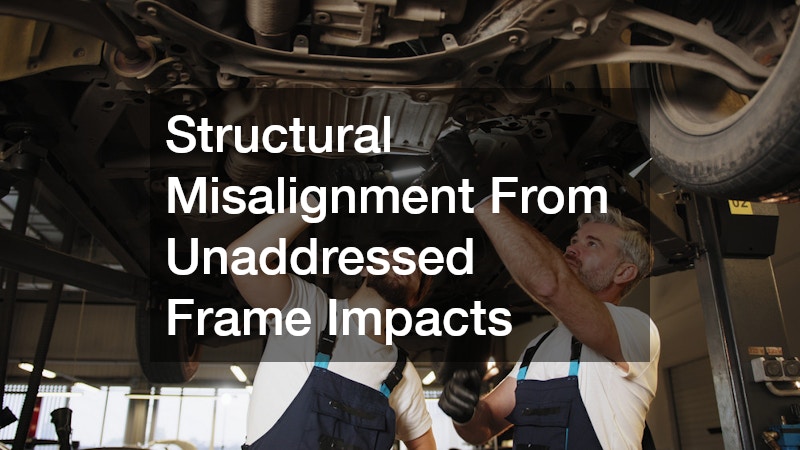
Not all collision damage is visible on the surface. A minor bump — even one that only cracks a bumper cover or leaves a small dent — can shift your vehicle’s frame or suspension components just slightly out of alignment, sometimes by fractions of an inch, something that is not obvious during everyday driving. Unibody frames, which most modern cars use, are especially prone to this because a hard impact anywhere on the structure can transmit stress to areas far from the point of contact.
Over time, this misalignment causes uneven tire wear, steering pull, and stress on suspension parts that were never designed to compensate for a bent frame. You might notice your steering wheel sitting slightly off-center, or one front tire wearing faster on its inner edge than the other. Left unchecked, these small signs often mean thousands of miles of extra strain on control arms, bushings, and wheel bearings.
The real danger is that misalignment problems compound rather than stay static. A frame that’s off by even a quarter inch can accelerate suspension wear so much that parts meant to last 60,000 miles fail at 20,000 or 30,000 instead. What could have been caught with a simple alignment check and frame measurement shortly after the collision can eventually mean replacing tires, struts, and control arms all at once.
Even a seemingly minor fender-bender can push a vehicle’s frame or unibody rails out of true by a fraction of an inch, a shift that’s often invisible to the naked eye but very real to the way the car handles. Auto collision repair professionals rely on laser and ultrasonic frame measuring systems to detect these subtle deviations, comparing dozens of reference points against factory specifications to catch problems long before they become dangerous or expensive.
Left unaddressed, that small misalignment doesn’t stay small. It forces the suspension and steering components to compensate constantly, which shows up as uneven tire wear, a steering wheel that pulls slightly to one side, or a faint vibration at highway speeds. Ignoring even a low-speed impact can mean months of accelerated wear on tires, bearings, and control arms. Tires alone can wear out 30-40% faster under a misaligned frame, and worn bearings or bushings often fail in a cascading fashion, one component’s early breakdown speeding up wear on the next.
All of this costs far more to replace than the original alignment correction would have. A frame straightening job caught early might run a few hundred dollars, while the compounded bill for tires, bearings, control arms, and labor down the road can easily climb into the thousands.
- Watch for uneven tire wear patterns after any impact, even minor ones — cupping or feathering on one side often signals a bent frame or misaligned suspension
- A steering wheel that sits off-center while driving straight is a common warning sign of frame shift, even if the car tracks reasonably well
- Persistent pulling to one side, especially under braking, can point to uneven wheelbase measurements caused by hidden frame damage
- Gaps between doors, hood, or trunk and the surrounding body panels may widen or narrow unevenly, revealing structural twisting
- Frame issues can affect airbag deployment timing in a future collision, since sensors rely on precise crumple-zone geometry to trigger correctly
- A misaligned frame can also throw off crash sensor calibration, causing airbags to deploy too late, too early, or not at all
Small Dents That Trap Moisture and Debris

A minor dent does more than dent your pride; it creates a pocket where moisture, dirt, and road grime can collect against the metal surface. This trapped moisture accelerates corrosion from the inside of the panel, often faster than surface rust because it is hidden from view and airflow.
Fortunately, many small dents can be corrected quickly and affordably through paintless dent removal, a technique that reshapes the metal without disturbing the factory paint. This option works best when the dent is addressed soon after it happens, before the metal stretches further or paint begins to crack at the edges.
- Paintless dent removal is often faster and cheaper than traditional bodywork
- It preserves the original factory finish, which helps with resale value
- Delaying treatment can turn a simple dent into a paint and rust issue
Declining Resale and Trade-In Value Over Time
Buyers and dealers alike notice cosmetic damage during inspections, and even minor collision marks can reduce a vehicle’s appraised value more than owners expect. A vehicle history report that shows unresolved damage, combined with visible dents or rust spots, signals neglect to a potential buyer, even if the mechanical condition is fine.
Regular auto detailing paired with prompt cosmetic repairs helps maintain a vehicle’s overall presentation and keeps small issues from compounding into larger value losses. Buyers are willing to pay more for a vehicle that looks cared for, and that impression starts with addressing damage before it becomes a permanent part of the car’s appearance.
- Unrepaired dents can lower trade-in offers by hundreds of dollars
- Rust stains or paint mismatch are red flags during dealer inspections
- A well-maintained exterior often outweighs minor mechanical wear in valuation
RV Body Damage That Leads to Water Intrusion
Recreational vehicles face a unique version of this problem because their exteriors are more vulnerable to cracking and seam separation. A minor scrape or impact near seams or vents can compromise the seal, allowing water to seep into the walls or ceiling over time. This kind of damage is often first noticed as a small soft spot long after the original impact occurred.
Because RV construction differs significantly from standard vehicles, repairs are best handled by a dedicated RV repair shop familiar with the specific materials and sealing methods involved. A small issue with the RV roof, if ignored, can lead to interior water damage, mold growth, and insulation failure that costs thousands more than the original seal repair would have.
- Check roof seams and seals twice a year, especially after any impact
- Soft spots in flooring or ceiling panels often indicate hidden water damage
- Address small cracks in roof coating before the rainy season begins
Hitch Equipment Stress From Minor Frame Damage
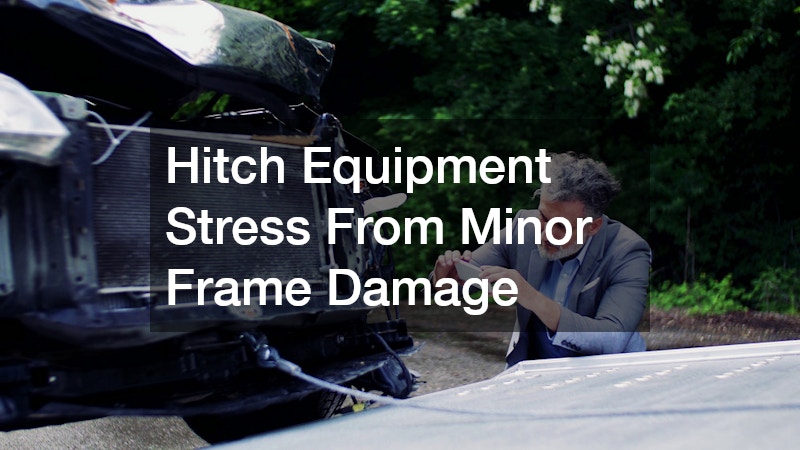
If your vehicle or trailer has sustained even minor collision damage near the hitch, frame, or rear panel, its towing capacity and safety can be affected without obvious symptoms. A slightly bent hitch receiver or frame section can throw off weight distribution, causing sway or uneven braking during towing.
This becomes especially important for owners who rely on heavy towing for work, hauling equipment, trailers, or recreational loads regularly. A frame that is even slightly compromised is not built to handle the same stress it once did, and pushing it without inspection increases the risk of equipment failure or an accident on the road.
- Have hitch and frame components inspected after any rear-end impact
- Sway while towing can indicate misalignment, not just load imbalance
- Uneven trailer tire wear can signal a towing setup issue tied to frame damage
Aftermarket Additions That Mask or Complicate Repairs
Many drivers add truck accessories like bed liners, brush guards, or roof racks, which can actually hide minor collision damage until it becomes severe. A bent bracket or cracked mounting point beneath an accessory may go unnoticed during a casual inspection, allowing rust or structural stress to progress unseen.
When damage does occur near these installations, repair work often takes longer because accessories must be removed and reinstalled correctly to maintain proper fit and function. Getting a full inspection after a collision, rather than assuming accessories are undamaged, prevents small problems from being locked in place under a cover you rarely look under.
- Inspect accessory mounting points after any collision, however minor
- Rust can spread faster under sealed accessories due to trapped moisture
- Reinstalling accessories incorrectly can create new stress points on the body
Routine Maintenance Delays Triggered by Cosmetic Neglect

Owners who postpone minor collision repairs often postpone other maintenance tasks too, creating a cycle where small issues pile up together. The psychology is understandable: a dented fender or scraped bumper doesn’t feel urgent, so it becomes mentally bundled with other “someday” tasks rather than handled on its own timeline. Skipping a scheduled oil change while waiting to “deal with everything at once” is a common pattern, but it puts unrelated mechanical health at risk alongside the cosmetic damage. This bundling effect tends to snowball. A driver who delays a $400 bumper repair might also push back a $50 oil change, skip a tire rotation, or ignore a check-engine light that flickered on around the same time. Each of these has its own maintenance window, and stacking them together means multiple systems degrade simultaneously instead of being addressed as they arise.
The financial math rarely favors this approach. An oil change delayed by a few thousand miles can accelerate engine wear, while a deferred rotation shortens tire life and affects handling. What started as a single cosmetic issue can quietly multiply into two or three additional repair bills, none of which were caused by the collision itself but all of which trace back to the same decision to wait.
It’s tempting to put off an oil change or tire rotation when you’re already dreading a trip to the body shop, but bundling everything into one dreaded “car project” often backfires. Psychologically, minor cosmetic damage can make the whole vehicle feel like a burden, so routine tasks get pushed back weeks or months. That delay is where the real cost creeps in. Skipping a scheduled oil change by even 3,000-5,000 miles can accelerate engine wear, while a missed tire rotation leads to uneven tread wear that shortens tire life by thousands of miles.
Delayed brake inspections are worse still — what starts as a $150 pad replacement can turn into a $500+ rotor replacement if ignored too long. Treating repairs as separate, manageable tasks rather than one overwhelming project keeps your vehicle in better shape overall. Schedule the dent repair for a slow week, but don’t let it bump your maintenance appointment to “whenever” — put both on the calendar independently. Addressing a dent now and sticking to your maintenance schedule separately prevents both issues from spiraling into bigger, costlier repairs down the road. A few hundred dollars in cosmetic work today is far cheaper than a neglected engine or worn-out brake system later.
- Set separate calendar reminders for oil changes, tire rotations, and fluid checks so they don’t get pushed back while you wait on body shop scheduling
- Small collision damage rarely affects engine health, so don’t bundle both types of care together or delay one waiting on the other
- Bumper dents or scratched panels can hide sensors, wiring, or bracket damage that only surfaces during a routine inspection, so mention any recent fender-benders to your mechanic
- A consistent maintenance record, backed by dated receipts and service logs, helps preserve resale value alongside cosmetic upkeep
- Skipping even one 3,000-5,000 mile service interval while focused on bodywork can void warranty coverage or mask developing mechanical issues
Minor collision damage rarely stays minor when it is left untreated, whether it is a small dent trapping moisture, a chipped paint edge inviting rust, or a slightly bent frame affecting your ride’s safety. The cost of waiting almost always exceeds the cost of addressing the problem while it is still small and manageable. Take the time to get any new damage assessed quickly, even if it looks purely cosmetic, and keep your regular maintenance on schedule regardless of repair plans. Acting early protects both your budget and your vehicle’s long-term value.