

A serious road accident is one of the most jarring experiences a driver can face. In a fraction of a second, a peaceful drive can turn into a high-stress emergency involving crushed metal, flashing lights, and rising adrenaline. In the immediate aftermath of a collision, shock often clouds clear thinking. Yet, the decisions you make in the minutes, hours, and days following an incident have a profound impact on your physical health, legal rights, and financial recovery.
Navigating the aftermath of a major crash requires a structured, step-by-step approach. From securing the scene and obtaining medical evaluations to documenting damage and restoring your vehicle, every phase demands attention to detail. This guide breaks down the essential protocol every driver should follow to protect themselves, manage claims effectively, and navigate the recovery process with confidence.
1. Immediate On-Scene Priorities: Securing Safety and Calling for Help

The moments immediately following an impact are critically important for preventing further damage and ensuring swift medical assistance. In the aftermath of an accident, your utmost priority must be safety—both your own and that of any other individuals entangled in the situation. This involves taking swift and measured actions to stabilize the scene and summon help as efficiently as possible.
- Check for Severe Injuries: Prior to unfastening your seatbelt or attempting to exit your vehicle, it’s crucial to conduct a self-assessment for any signs of injury. Pay close attention to any immediate sensations of pain, numbness, or indications of bleeding. Following this, check on the condition of your passengers with the same level of care. It is imperative to avoid moving anyone who reports severe neck or back pain unless there’s a pressing danger, such as a fire or potential explosion.
- Turn On Hazard Lights: Engage your vehicle’s hazard lights as soon as possible. This simple action is vital for warning approaching drivers of the incident, thereby preventing additional accidents. This step becomes even more essential if the accident happens at night, around a curve with limited visibility, or during adverse weather conditions that reduce driver visibility.
- Evaluate Vehicle Placement: Survey the scene to determine the current state and position of the vehicles involved. If the accident is minor and vehicles remain operable, it’s advisable to relocate them to the road’s shoulder or a nearby safe side street to alleviate traffic congestion. However, in cases where there are serious injuries, vehicles are disabled, or if there is a suspicion of fluid leaks from the vehicles, it is best to leave them in place until emergency services arrive on scene to handle the situation.
- Set Up Safety Markers: Utilize any available equipment such as traffic cones, reflective triangles, or road flares from your emergency kit to demarcate a safe perimeter around the crash site.
After you have managed to establish a basic level of safety at the scene, immediately contact emergency services by dialing 911. It is essential to communicate clearly and concisely with the dispatcher, providing them with your exact location, using landmarks for precision if necessary, the number of vehicles involved, and any visible injuries that need urgent attention.
2. Documenting the Crash Scene Like a Professional
Once emergency services are en route and the scene is stable, shift your attention to evidence collection. Memory fades quickly, and physical evidence on the road can disappear within hours due to weather or traffic clearing efforts. Thorough documentation is essential for insurance claims and liability determinations.
- Photograph the Surrounding Area: Take wide-angle photos showing the relative positions of all vehicles, traffic signals, road signs, lane markings, and skid marks. Document weather conditions, visibility, and any road hazards like potholes or debris that may have contributed to the crash.
- Photograph Vehicle Damage Close-Up: Capture clear images of all external damage from multiple angles. Make sure to get detailed shots of broken glass, crushed body panels, deployed airbags, and localized impacts. Pay particular attention to tire blowouts or structural damage around the wheels, as impacts to the steering geometry often require specialized wheel rim repair alongside general body fixes.
- Exchange Information Systematically: Collect names, phone numbers, email addresses, driver’s license numbers, and insurance policy details from all involved drivers. Note the make, model, year, and license plate number of every vehicle involved.
- Gather Neutral Eyewitness Statements: Speak to passersby or other drivers who stopped to help. Request their names and contact information, and ask if they are willing to provide a quick summary of what they witnessed.
When law enforcement arrives, cooperate fully and provide a clear, factual account of what happened. Avoid guessing or speculating about speeds, distances, or fault. Request the investigating officer’s name, badge number, and police report identifier so you can obtain an official copy of the crash report once it is finalized.
3. Protecting Your Health and Medical Rights
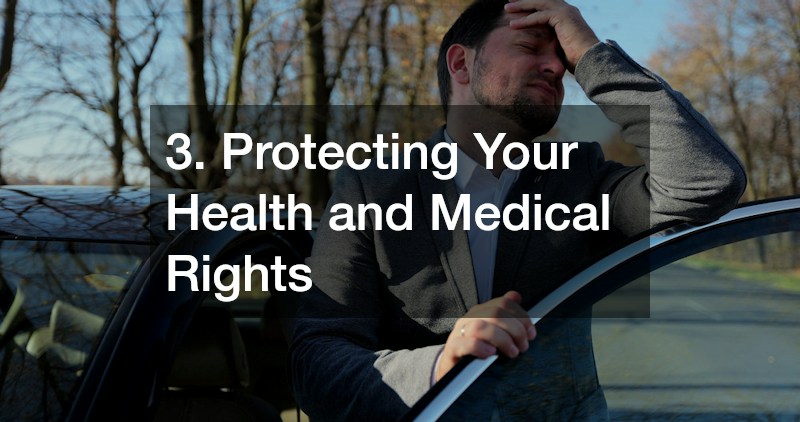
Adrenaline is a powerful hormone that frequently masks severe physical trauma. In the immediate aftermath of a collision, your body enters a “fight or flight” state, suppressing pain signals. Many accident victims report feeling fine at the scene, only to wake up 24 to 48 hours later with debilitating pain.
- Seek Immediate Medical Attention: Even if you feel uninjured, visit an emergency room, urgent care clinic, or primary care physician immediately following the crash. Conditions such as whiplash, internal bleeding, concussions, and micro-tears in spinal discs often exhibit delayed symptoms.
- Follow Prescribed Treatment Plans: Attend every follow-up appointment, fill all prescribed medications, and follow physical therapy instructions carefully. Gaps in medical care allow insurance adjusters to argue that your injuries were not caused by the accident or were not as severe as claimed.
- Maintain a Detailed Symptom Log: Keep a daily journal tracking your physical pain levels, emotional state, sleep disturbances, and how the injuries limit your daily activities or work performance.
- Organize All Medical Documentation: Create a dedicated file for discharge summaries, doctor notes, diagnostic imaging reports (X-rays, MRIs), prescription receipts, and medical bills.
Establishing a direct, unbroken link between the crash and your medical treatment is essential. A comprehensive medical record protects both your health and your right to fair compensation for medical expenses, lost wages, and pain and suffering.
4. Navigating Legal Protection and Fault Assessment
Determining financial responsibility after a serious collision is rarely simple. Insurance companies are driven by their bottom line, and opposing parties may try to shift blame to minimize their financial liability. Understanding how to protect your legal interests early in the process is paramount.
- Understand Fault and Comparative Negligence: In many jurisdictions, liability is shared based on percentage of fault. Even if you were partially at fault, you may still be entitled to recover a portion of your damages, depending on local statutes.
- Avoid Quick Settlement Offers: Insurance adjusters representing the at-fault driver may reach out quickly with a settlement offer. These early offers are almost always far below the actual value of your claim and are designed to settle the case before the full extent of your injuries and long-term costs are known.
- Consult an Attorney for Complex Cases: If the crash resulted in significant medical expenses, permanent disability, lost earning capacity, disputed liability, or multi-vehicle complexity, retaining an automobile accident lawyer is critical. An experienced attorney can preserve vital evidence, interview expert witnesses, calculate long-term damages, and negotiate directly with insurance adjusters on your behalf.
- Control Your Communications: Do not post about the accident, your injuries, or your recovery on social media platforms. Insurance defense teams routinely monitor public profiles for photos or comments that can be used to discredit injury claims.
Having legal guidance ensures that you do not inadvertently make statements that compromise your case or accept a settlement that fails to cover your future medical and financial needs.
5. Initiating the Insurance Claims Process
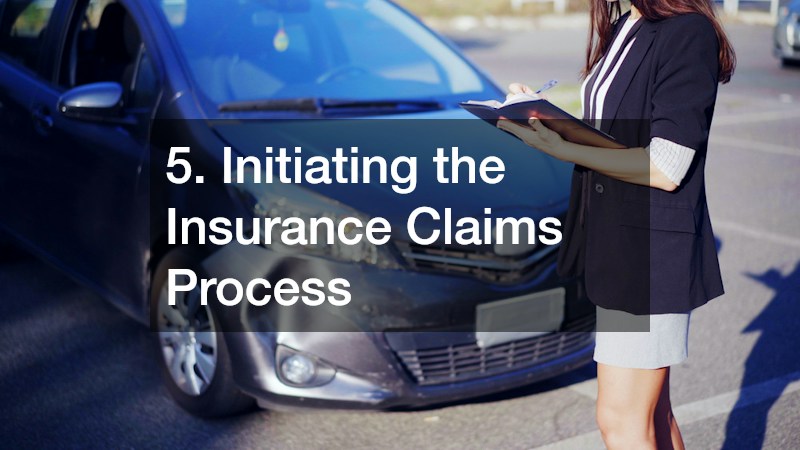
Dealing with insurance companies requires clear organization, precise facts, and a firm grasp of your policy entitlements. Initiating claims promptly helps streamline vehicle repairs and medical reimbursements.
- Report the Accident Promptly: Contact your insurer as soon as possible after the incident to report the crash. Most insurance contracts contain strict timelines for notification.
- Provide Factual Details to Your Provider: Stick strictly to the documented facts when speaking with your auto insurance agency representative. Describe what occurred based on the police report and your photos without offering speculative opinions on fault.
- Understand Your Coverage Options: Review your policy to determine what coverages apply. Collision coverage pays for vehicle damage regardless of fault, while comprehensive coverage applies to non-collision incidents. Personal Injury Protection (PIP) or Medical Payments coverage helps pay immediate medical bills, while Uninsured/Underinsured Motorist coverage protects you if the at-fault driver lacks adequate insurance.
- Track All Incident-Related Expenses: Keep receipts for every expense stemming from the accident, including rental vehicle charges, transportation costs to medical appointments, and out-of-pocket medical supplies.
Be cautious when communicating with the other driver’s insurance adjuster. You are under no legal obligation to provide a recorded statement to the opposing insurer without first seeking professional guidance or having your representative present.
6. Selecting Qualified Restorations & Repair Specialists
Once your health and claims are in order, turning your attention to vehicle recovery is the next major step. Restoring a modern vehicle after a severe collision requires advanced diagnostic tools, specialized equipment, and certified technicians.
- Know Your Right to Choose: Insurance companies often recommend preferred facilities to streamline costs. However, in almost all jurisdictions, you have the absolute legal right to choose where your vehicle is restored.
- Verify Certifications and Standards: Select a licensed auto repair shop or auto repair service that holds industry certifications such as I-CAR Gold Class or ASE (Automotive Service Excellence). These certifications ensure technicians are trained on modern vehicle materials, crumple zone dynamics, and complex electrical systems.
- Demand a Comprehensive Diagnostic Sweep: Modern vehicles contain dozens of interconnected electronic control units, safety sensors, and computer systems. Ensure the shop performs both a pre-repair and post-repair electronic scan to identify hidden diagnostic fault codes.
- Inquire About Specialized Mechanical Work: Mechanical components, steering systems, and suspension assemblies often sustain hidden stress during an impact. Work with an experienced auto mechanic who can thoroughly inspect the drivetrain, engine mounts, braking components, and alignment to ensure the vehicle is structurally sound.
Taking the time to research and vet repair professionals guarantees that your vehicle is returned to manufacturer safety standards rather than just visually patched up. Local auto repairs may also be needed at a shop. If so, a tow truck service may be able to take your car for you.
7. Overseeing Physical Bodywork and Mechanical Restorations
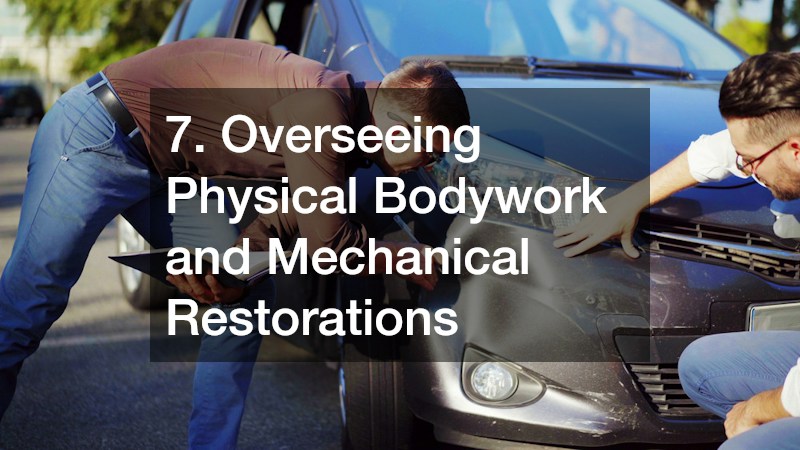
Rebuilding a crash-damaged vehicle involves two major disciplines: structural/cosmetic bodywork and mechanical repair. Understanding this process helps you oversee the restoration effectively and monitor quality control.
- Frame Alignment and Structural Integrity: Severe impacts often bend or twist the vehicle’s unibody or frame structure. Specialized hydraulic frame-straightening equipment and laser measuring systems are used to pull the frame back to precise factory dimensions.
- Body Panel Replacement and Refinishing: Damaged body panels, doors, and structural pillars must be repaired or replaced using original equipment manufacturer (OEM) parts whenever possible. Skilled technicians at a professional auto body center will align panel gaps, apply corrosion protection, and perform multi-stage paint matching to seamlessly blend new paint with existing panels.
- Tracking Structural and Cosmetic Fixes: Keep close track of all work completed during the restoration process. A major collision requires extensive labor, and managing complex car repairs means ensuring that every component on the estimate—from structural welds to sensor calibrations—is fully completed.
- Conducting a Detailed Final Walkthrough: Before accepting your vehicle back, inspect it in bright daylight. Check for uniform paint color and texture, proper alignment of doors and hood lines, and functioning lights. Take the vehicle on a thorough test drive to verify smooth steering, proper wheel alignment, normal braking response, and the absence of unusual noises or warning lights.
Reviewing all repair invoices and warranties carefully before signing off on final insurance payouts ensures that all work meets safety standards and protects your vehicle’s resale value.
Using This Guide for Auto Support
Recovering from a serious road accident is a journey that spans immediate crisis management, medical care, legal considerations, and detailed vehicle restoration. While the immediate aftermath of a crash can feel overwhelming, approaching the situation with a calm, methodical mindset makes the process manageable and protects your long-term interests.
By prioritizing safety on the scene, documenting evidence thoroughly, seeking prompt medical evaluations, and working with qualified professionals across every stage of recovery, you can safeguard your physical health, your financial stability, and your rights. Taking systematic steps today ensures that a sudden collision remains a temporary setback rather than a long-term burden.